How to Extract Testing Requirements from Construction Specs
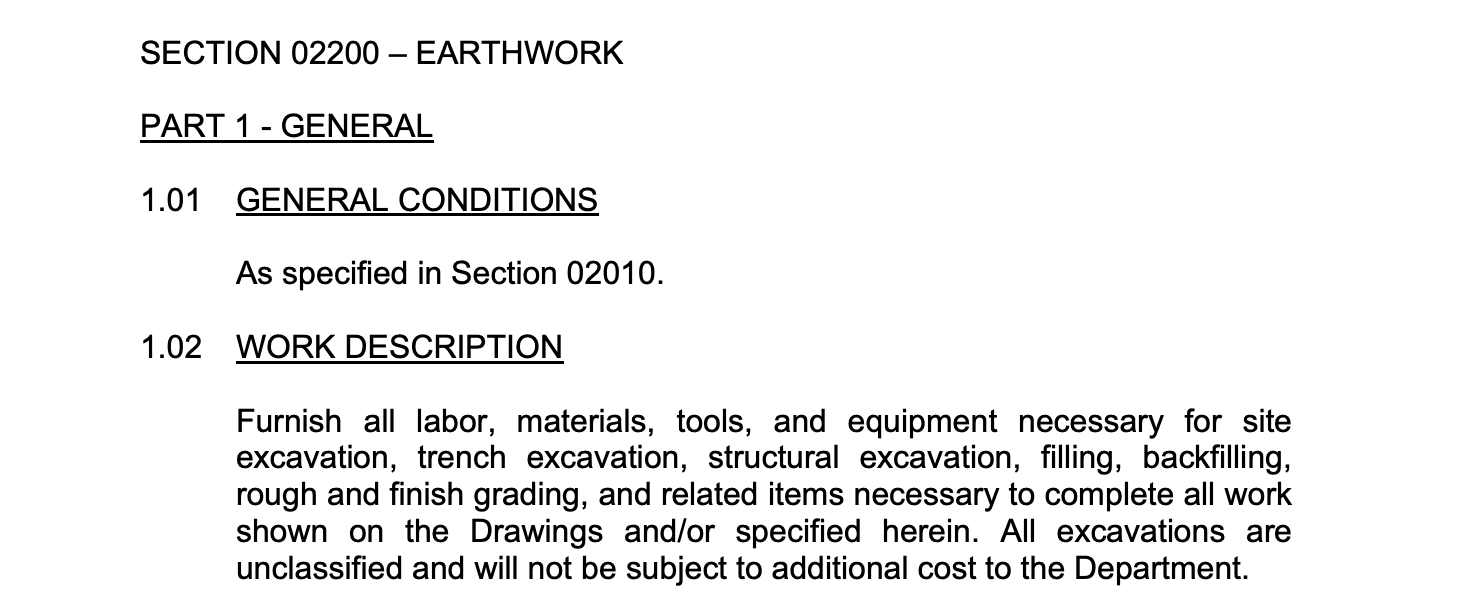
Every testing requirement on your project is in the specs. The problem? It could be anywhere. Page 47, page 312, buried in a paragraph you almost skipped. And every spec writer has their own way of saying "you need to test this." Miss one, and you're dealing with a failed inspection or a re-test that pushes the schedule. Here's where to look and what to look for so that doesn't happen to you.
What Testing Requirements Look Like in Specs
Testing requirements in construction specifications typically appear as references to standard test methods published by organizations like ASTM, ACI, AWS, AASHTO, and others. They're not always labeled "testing requirements" — you need to recognize the patterns.
Here are the most common forms:
- Direct test standard references: "Concrete compressive strength testing shall be performed in accordance with ASTM C39/C39M." This is the clearest form — an explicit citation of a test method.
- Frequency requirements: "One set of four cylinders shall be cast for each 50 cubic yards of concrete placed, or fraction thereof, per ACI 318." Frequencies can be per-quantity, per-day, per-area, or per-lot.
- Acceptance criteria: "Compressive strength shall equal or exceed f'c as specified in the structural drawings at 28 days." This tells you the pass/fail threshold.
- Performance criteria with implied testing: "Waterproofing membrane shall demonstrate a minimum tensile strength of 200 psi per ASTM D412." The word "testing" may never appear, but a test is clearly required.
Where to Find Them
Division 01: General Requirements
Start here. Section 01 45 00 (Quality Control) or 01 40 00 (Quality Requirements) establishes the project-wide testing framework. This section typically specifies who pays for testing, which lab to use, general reporting requirements, and default testing frequencies that apply unless a specific technical section says otherwise.
Individual Technical Divisions (02-49)
Each technical specification section may contain testing requirements in several places:
- Part 1 — General: References section, which lists all applicable ASTM/ACI/AWS standards. Also check the Quality Assurance and Submittals paragraphs.
- Part 2 — Products: Material property requirements that imply testing. "Concrete shall have a minimum 28-day compressive strength of 4,000 psi" means you need ASTM C39 testing.
- Part 3 — Execution: Field testing, inspection, and verification requirements. This is where you find placement testing (slump, temperature, air content for concrete), in-place testing (nuclear density for soils), and installation verification.
General Notes on Drawings
Structural, geotechnical, and civil drawings frequently include general notes that add or modify testing requirements. A structural general note might say "All structural welding shall be inspected per AWS D1.1, with 25% UT on complete joint penetration welds" — a requirement that may not appear anywhere in the specifications. If you only read the specs, you miss it.
Common Mistakes That Lead to Missing Requirements
- Skipping Division 01. Many QC managers jump straight to the technical divisions. But Division 01 often contains blanket requirements like "All concrete testing per ACI 301 unless noted otherwise" that generate dozens of line items in your ITP.
- Missing frequency overrides. Division 01 might say "One compaction test per 1,000 SF." But Section 31 23 00 (Excavation and Fill) might specify "One test per lift per area." The more specific section usually governs, but you need to read both to know.
- Overlooking plan callouts. A detail on Sheet S-12 might call for "Special Inspection per IBC 1705.3" for a post-tensioned slab. That requirement lives only on the drawings.
- Confusing reference standards with testing standards. Just because ASTM A615 is listed in the references doesn't mean you need to test for it on site. A615 is a material standard — the mill certifies compliance. But ASTM A706 reinforcing steel may require field bend testing. Context matters.
The Manual Extraction Process and Its Pain Points
The way most people do it: open each spec section in PDF, read start to finish, and type every testing requirement into a spreadsheet. After a few projects you develop a feel for where to look, but even the best QC managers miss things. We're human:
- Fatigue after 6 hours of reading dense technical language
- Requirements scattered across multiple paragraphs in the same section
- Inconsistent language between spec writers ("shall be tested" vs. "testing is required" vs. "verify by testing")
- Addenda that modify requirements issued late in the bidding process
- Time pressure — the ITP is due before mobilization, but you're also estimating, staffing, and buying out subcontractors
The result? Most ITP logs either start with gaps and get patched during construction as people catch what was missed, or they never get built at all. When they do exist, you're always playing catch-up instead of being ahead of the work.
How AI Extraction Works
SpecFunnel takes a different approach. You upload your spec PDF, and the AI scans the entire document — pulling out test standards, frequencies, and acceptance criteria and organizing them into a structured ITP log by MasterFormat division. You review the output, make adjustments based on your project-specific knowledge, and you're working from a solid starting point instead of a blank spreadsheet.
Frequently Asked Questions
What's the most commonly missed testing requirement in construction specs?
Special inspection requirements from drawing general notes. Structural engineers frequently specify special inspection requirements (per IBC Chapter 17) in drawing notes rather than in the project specifications. If your ITP is built only from the specs, you'll miss them. This is especially common for structural welding, high-strength bolting, and post-tensioned concrete.
How do you handle conflicting testing frequencies between spec sections?
The general rule is that the more specific section governs. If Division 01 says "one compaction test per 2,000 SF" but Section 31 23 00 says "one test per lift per 1,000 SF," you follow the technical section. When in doubt, use the more stringent requirement and get clarification from the engineer of record via RFI.
Can AI really extract testing requirements accurately?
AI is good at scanning hundreds of pages and pulling out test standards, frequencies, and criteria faster than anyone can manually. It gives you a very strong starting point for a QC professional to review, apply project-specific judgment, and verify against the drawings.
Extract every requirement in minutes
SpecFunnel reads your specs cover to cover and pulls out every ASTM code, frequency, and acceptance criterion — organized by division, ready for your review.
Book a Demo